Can stock be delivered to end users when the system is offline?
Yes. An offline-first inventory system can record an approved stock issue or delivery locally, reduce the available local balance, identify the receiving user, and preserve the action with its time and operator. The event remains queued until an approved internet, LAN, or controlled offline transfer path becomes available.
This allows stores and field teams to continue essential work without pretending that disconnected devices already share the same live balance. Sync status and conflict review remain visible when records are later combined.
What offline inventory management means
A normal cloud inventory system assumes that every user, device, and site can reach the server. That assumption fails in mines, forward units, ships, disaster zones, oil fields, and remote depots. Offline inventory management keeps a usable local record so work does not stop during outages.
The local record should include item identity, quantity, location, stock movement, demand requests, approvals, issues, and user actions.
The basic workflow
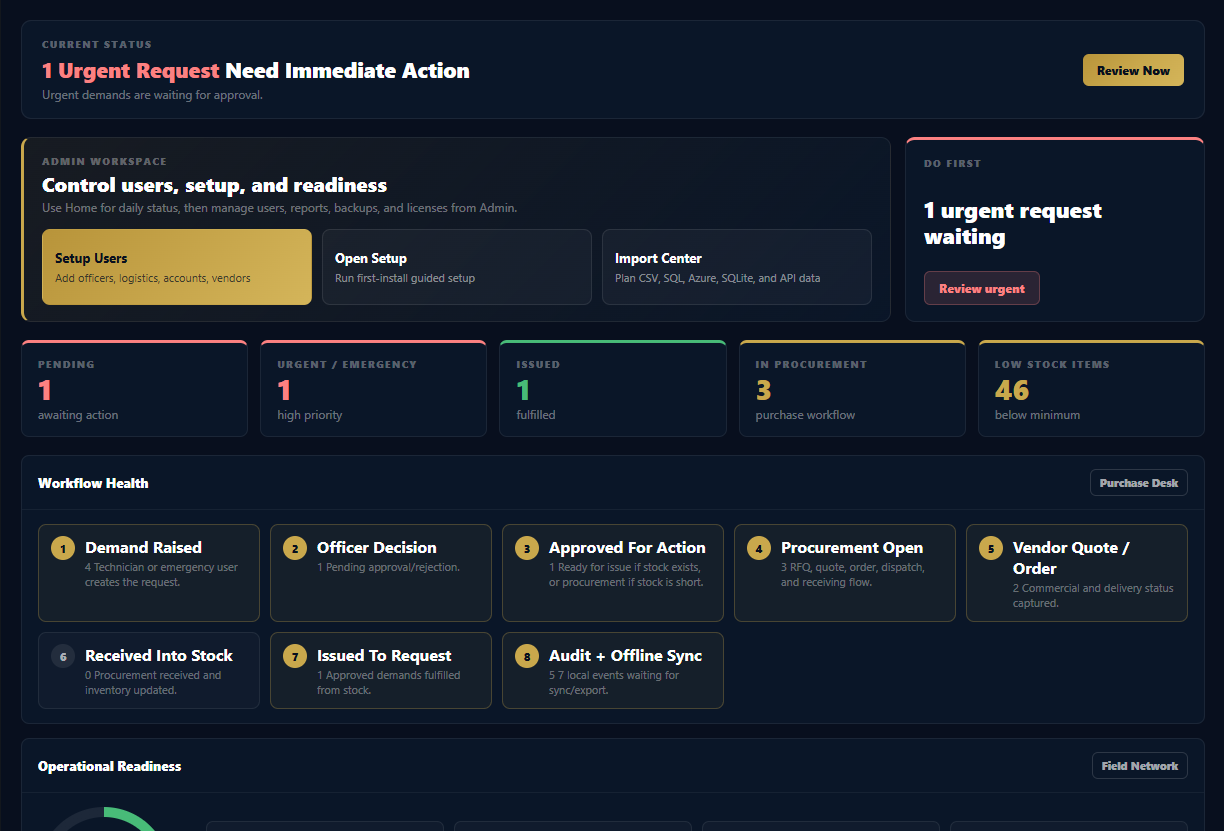
A field user raises a request. An officer or manager approves it. Logistics issues the item if stock exists. If stock is short, the demand becomes a replenishment signal. Each step should be visible to the team and preserved for later review.
How sync works later
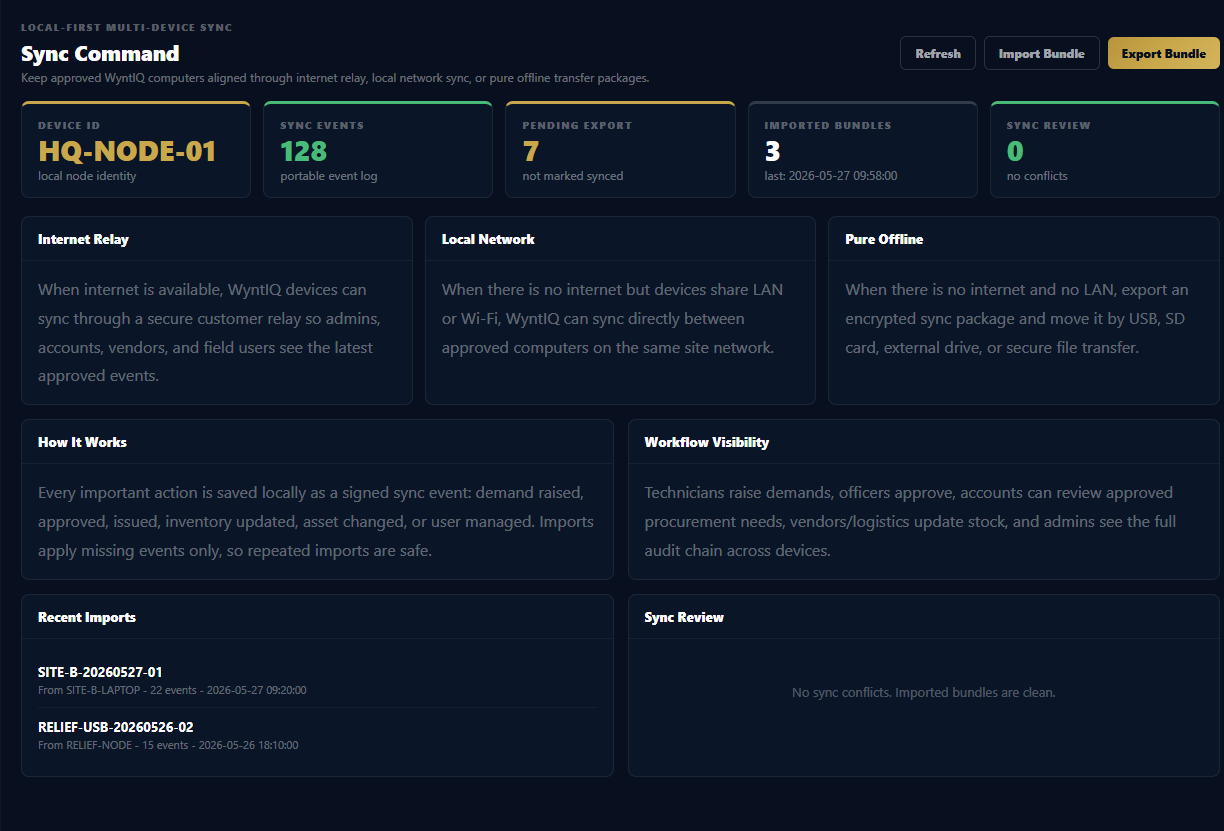
When connectivity returns, approved devices synchronize events. In stronger systems, sync is event-based: only missing actions are exchanged, repeated imports are safe, and conflicts can be reviewed instead of silently overwriting field data.
Why audit matters
Offline systems must answer the same accountability questions as online systems: who changed quantity, who approved a request, who issued stock, and when did it happen. A strong audit trail makes disconnected work trustworthy.
What to look for
- Local-first data storage for core work.
- Role-based request, approval, and issue workflow.
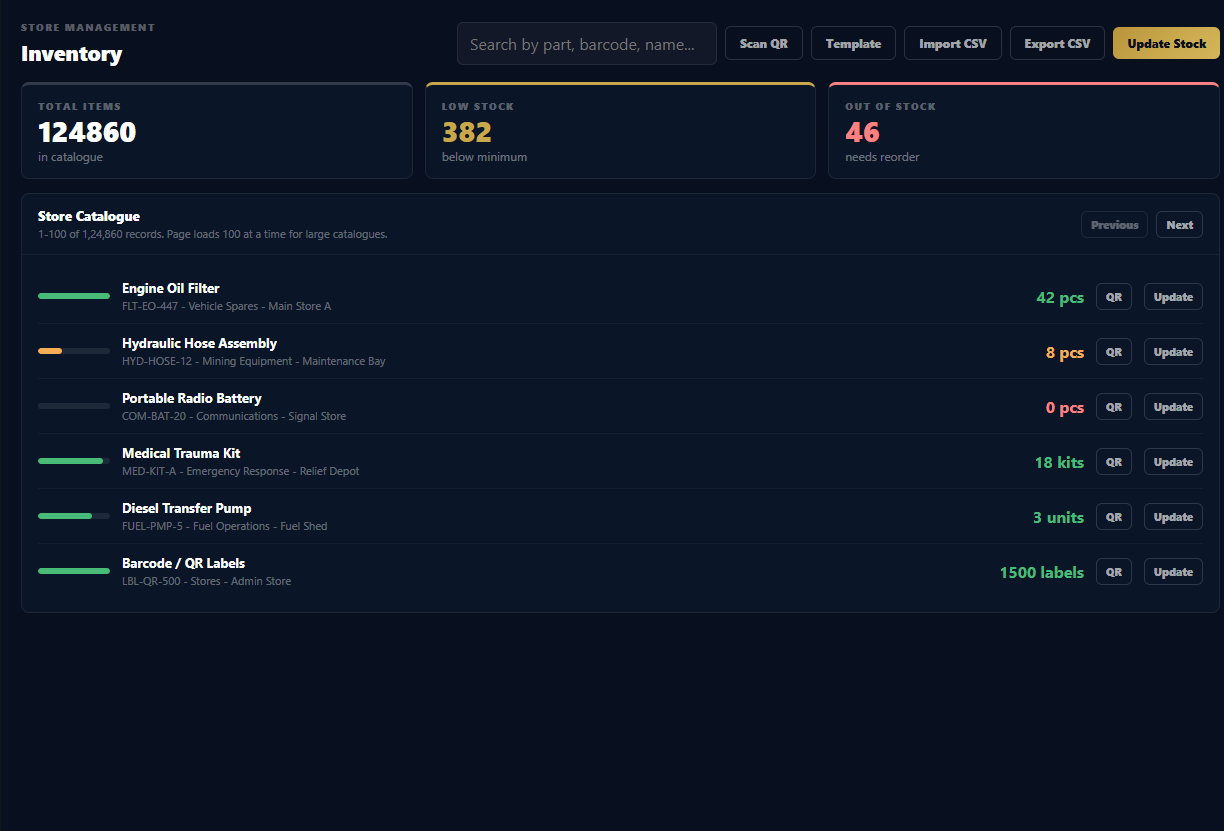
- QR or barcode lookup for physical items.
- Clear sync status and export/import options.
- Reports and audit records that work after reconnecting.
WyntIQ is built around this offline-first operating model for field logistics and material management.