Customer guide for learning WYNTIQ workflows, trial access, and deployment basics
How To Use WYNTIQ
Customer learning guide

Learn how to use WYNTIQ.

This guide explains the common customer workflow: setup, activation, inventory, demands, assets, QR tags, audit trails, readiness, sync, and support.

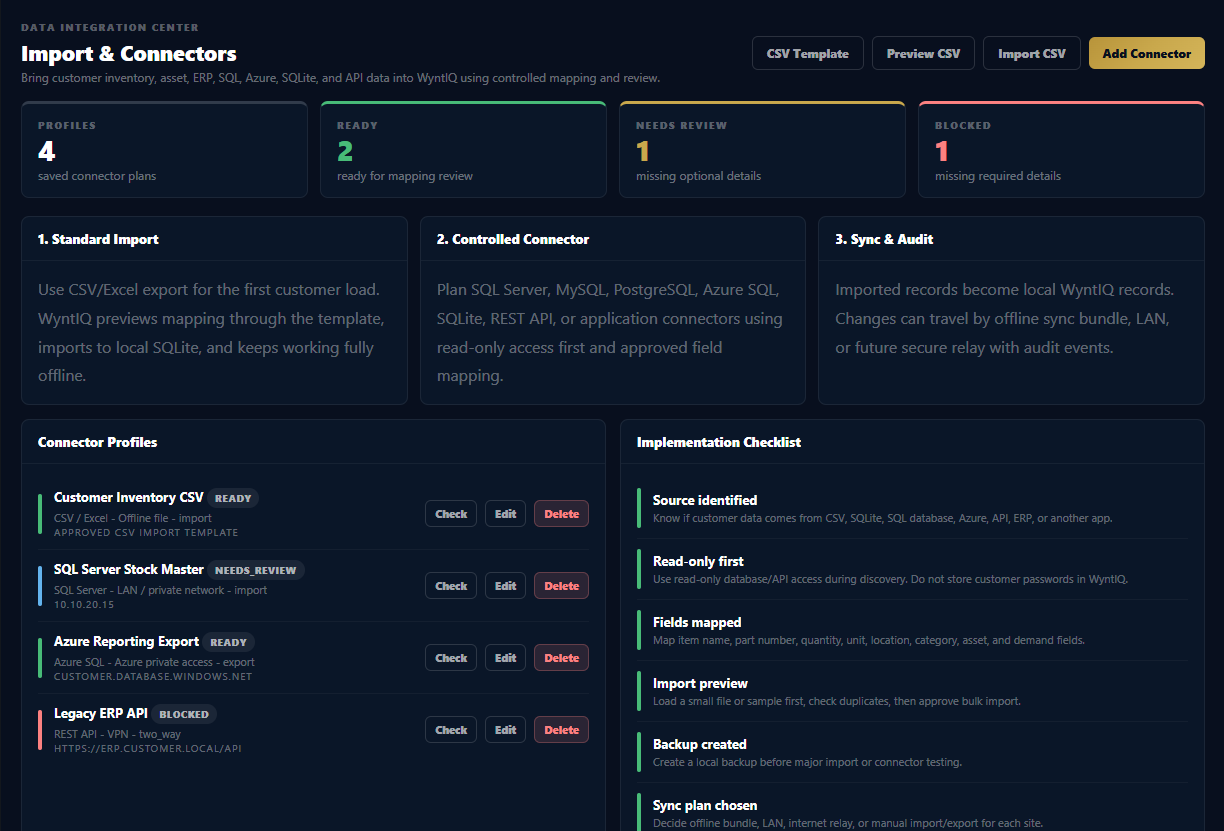
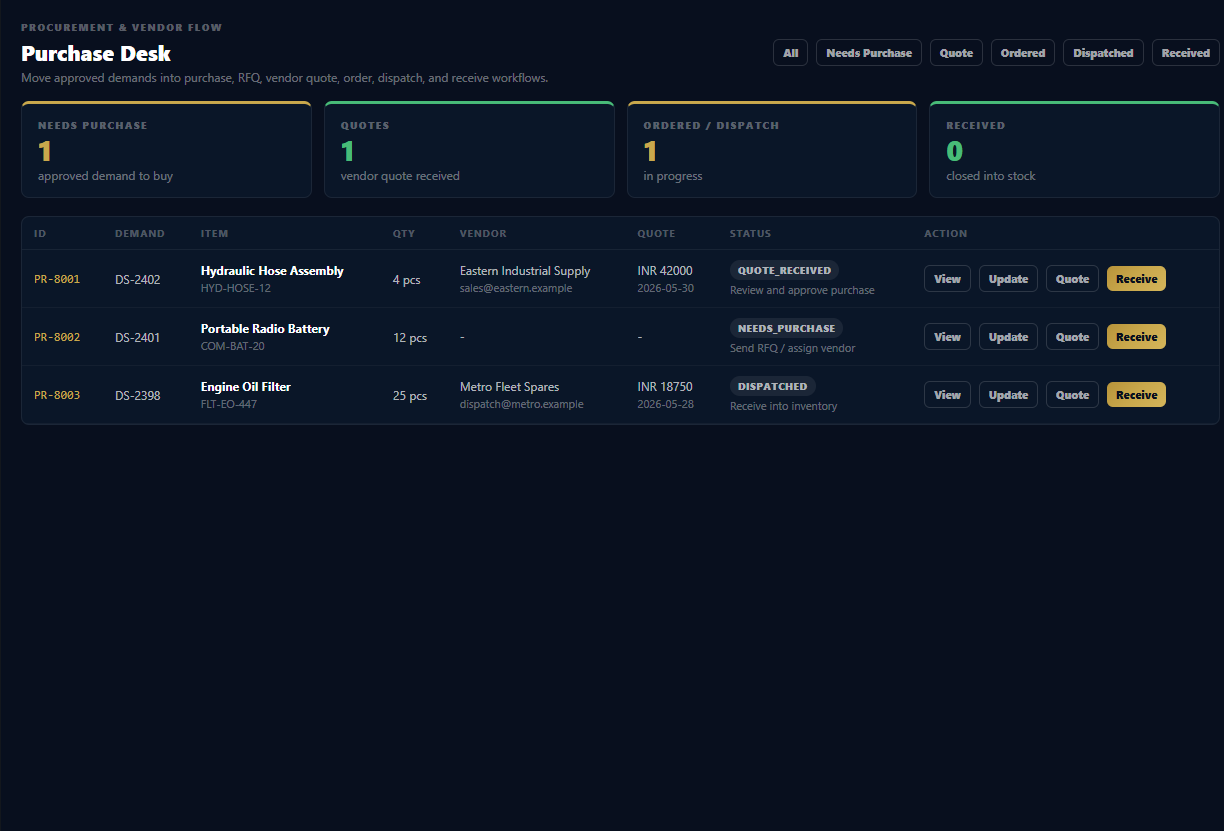
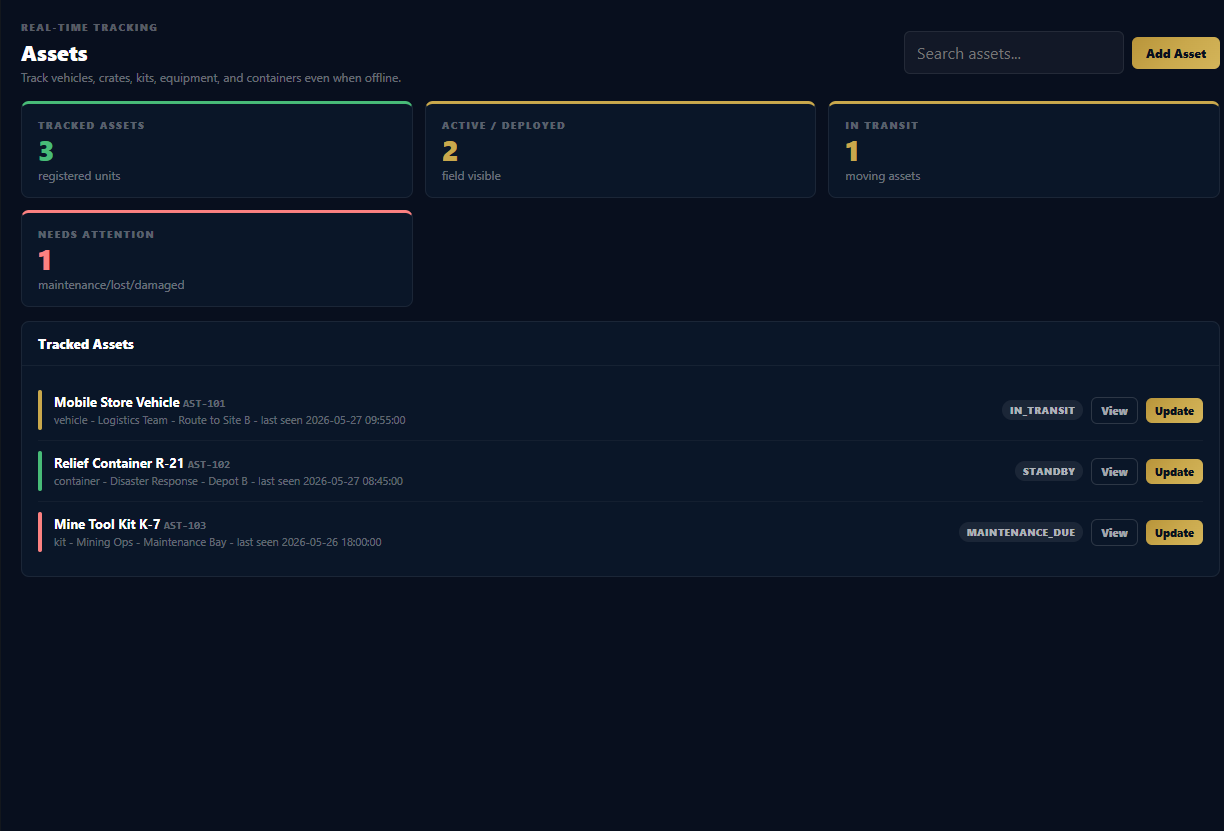
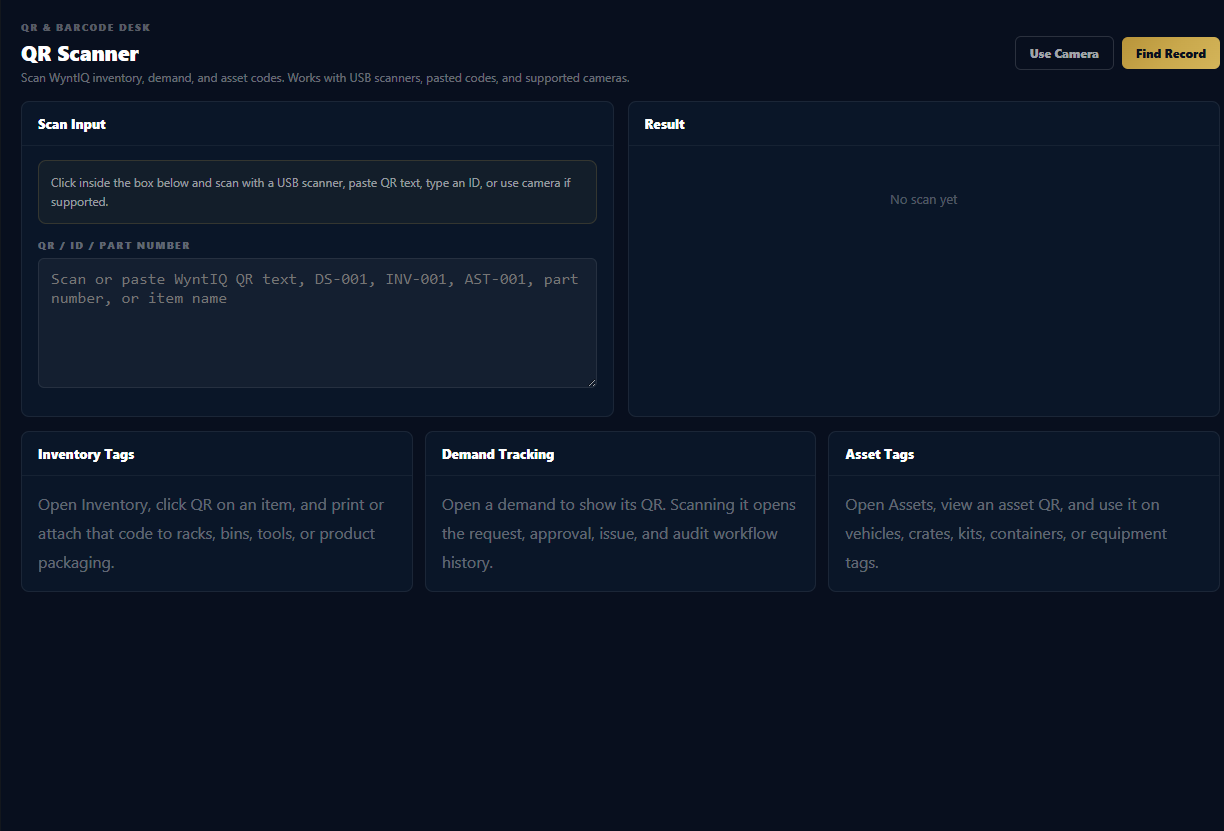
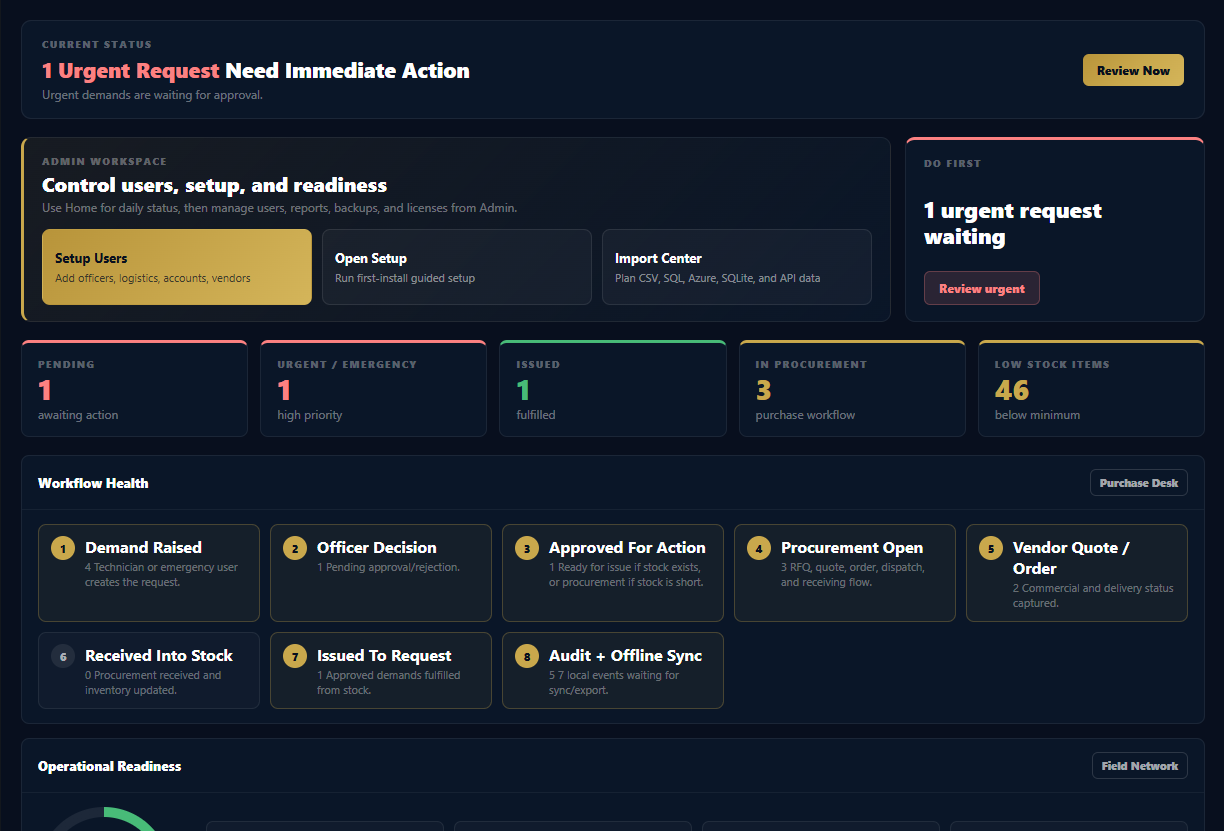
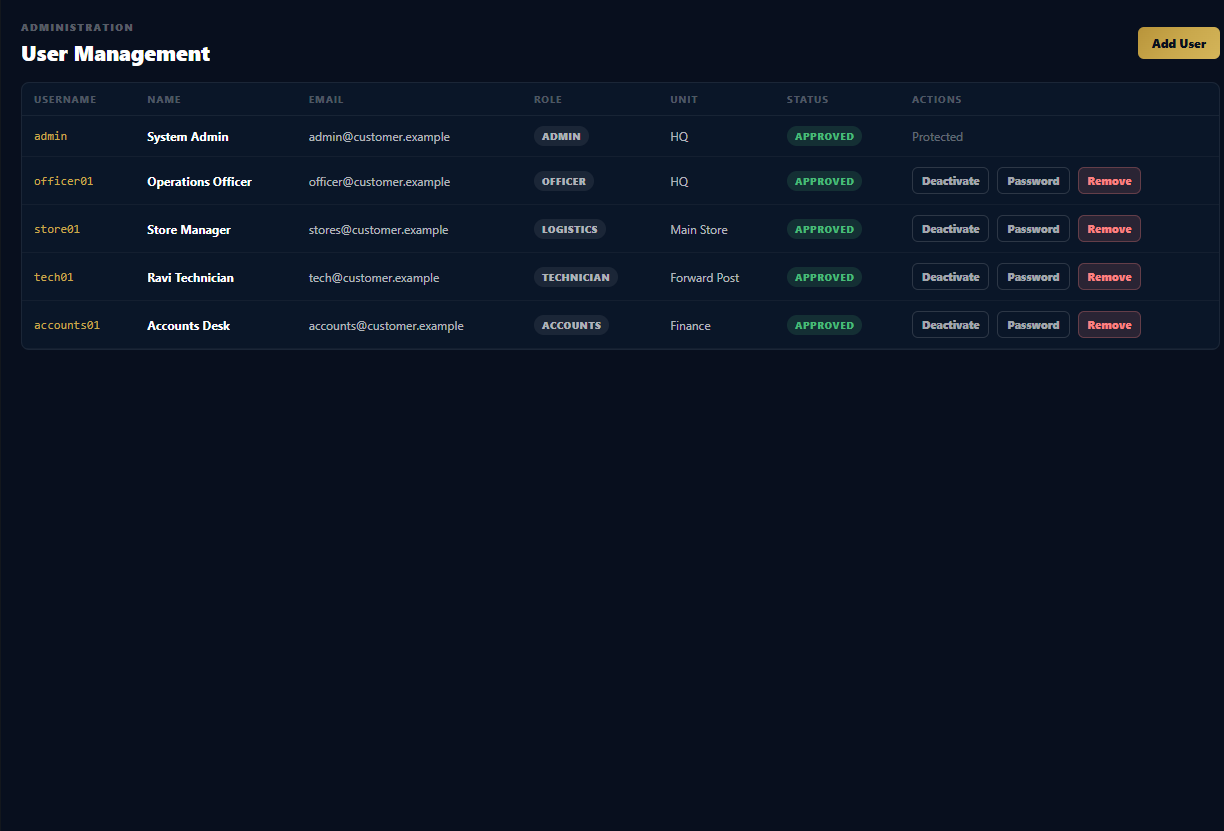
WYNTIQ customer guide interface preview

First steps after receiving access.

  1. Open WYNTIQ from your Windows, Linux, or approved web demo access.
  2. Sign in with the role provided by your administrator or trial contact.
  3. Review the dashboard for inventory health, pending demands, assets, and readiness signals.
  4. Start with sample data during evaluation before entering sensitive operational data.
For trial users, access is intended for evaluation. Production use should wait until deployment scope, license, and data handling are agreed.
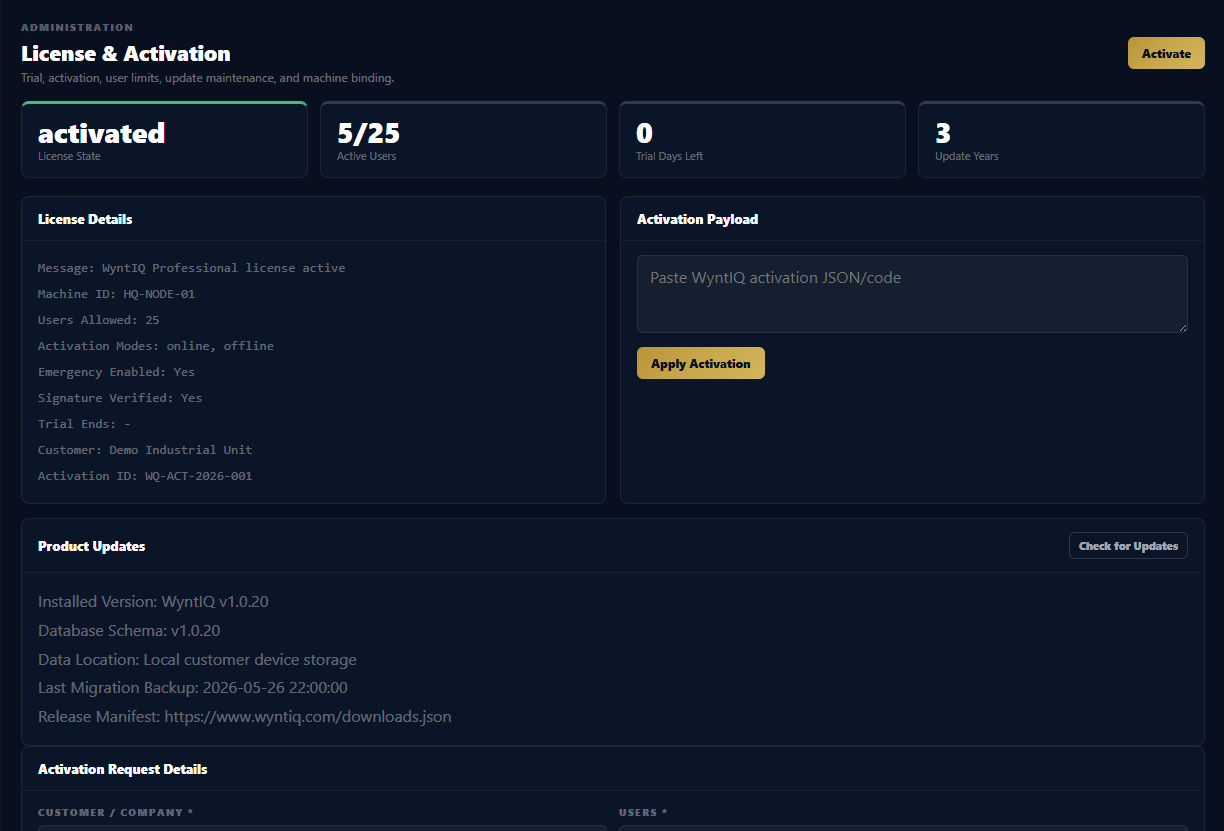
Activate trial or paid access.

Online activation

  1. Open the Activation screen inside WYNTIQ.
  2. Enter the activation code provided by TwinStance Solutions.
  3. WYNTIQ verifies the license and stores a local signed license token.

Offline activation

  1. Generate an offline request code or request file from WYNTIQ.
  2. Send the request to your WYNTIQ contact through the approved channel.
  3. Import or enter the offline activation code returned by TwinStance Solutions.
A standard trial lasts 7 days unless an extension or paid license is issued. Expired trials may move into read-only or paused mode depending on the build.

Understand roles before adding data.

  • Administrator: manages configuration, users, roles, and license status.
  • Officer / Manager: approves, rejects, and reviews operational activity.
  • Logistics user: manages stock, issues, receipts, and demand movement.
  • Technician / field user: updates asset status, scans QR tags, and records field events.
  • Auditor: reviews history, exports, and accountability records.

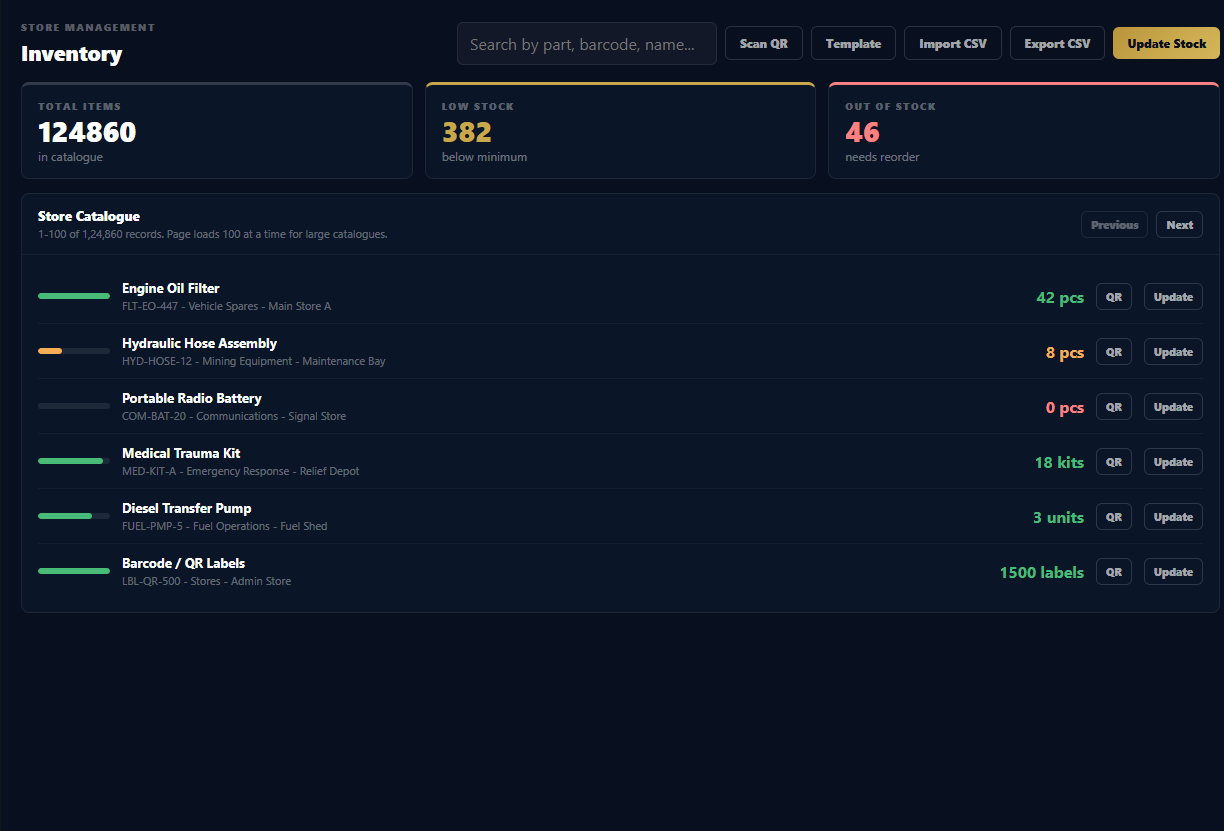
Manage stock and availability.

  1. Add or import item records with part name, category, location, quantity, and minimum stock threshold.
  2. Use stock status views to identify low-stock, out-of-stock, and healthy items.
  3. Record receipts, issues, transfers, and adjustments through the approved workflow.
  4. Use notes and references to preserve operational context for later review.

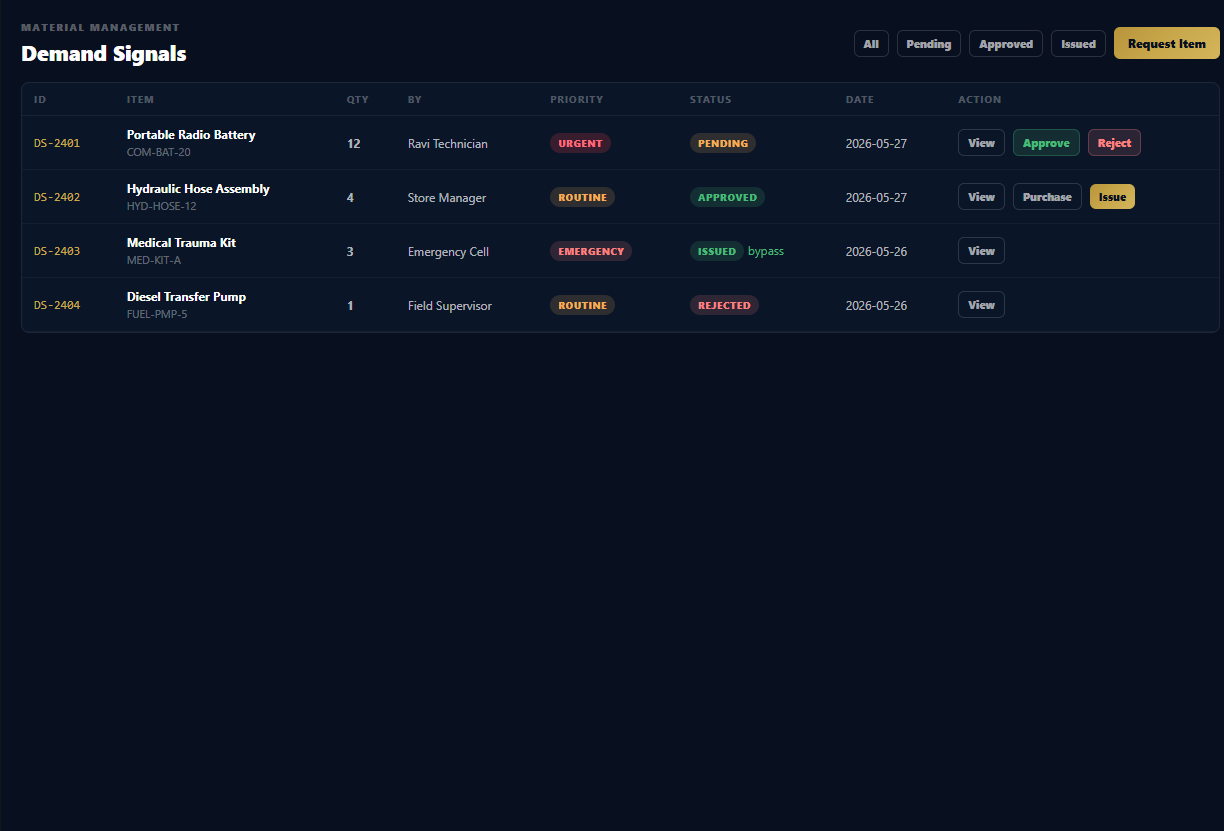
Raise, approve, and issue demands.

  1. Create a demand with item, quantity, urgency, requester, location, and reason.
  2. Approvers review the demand and either approve, reject, or request clarification.
  3. Logistics users issue stock when available or mark demand status for procurement or transfer.
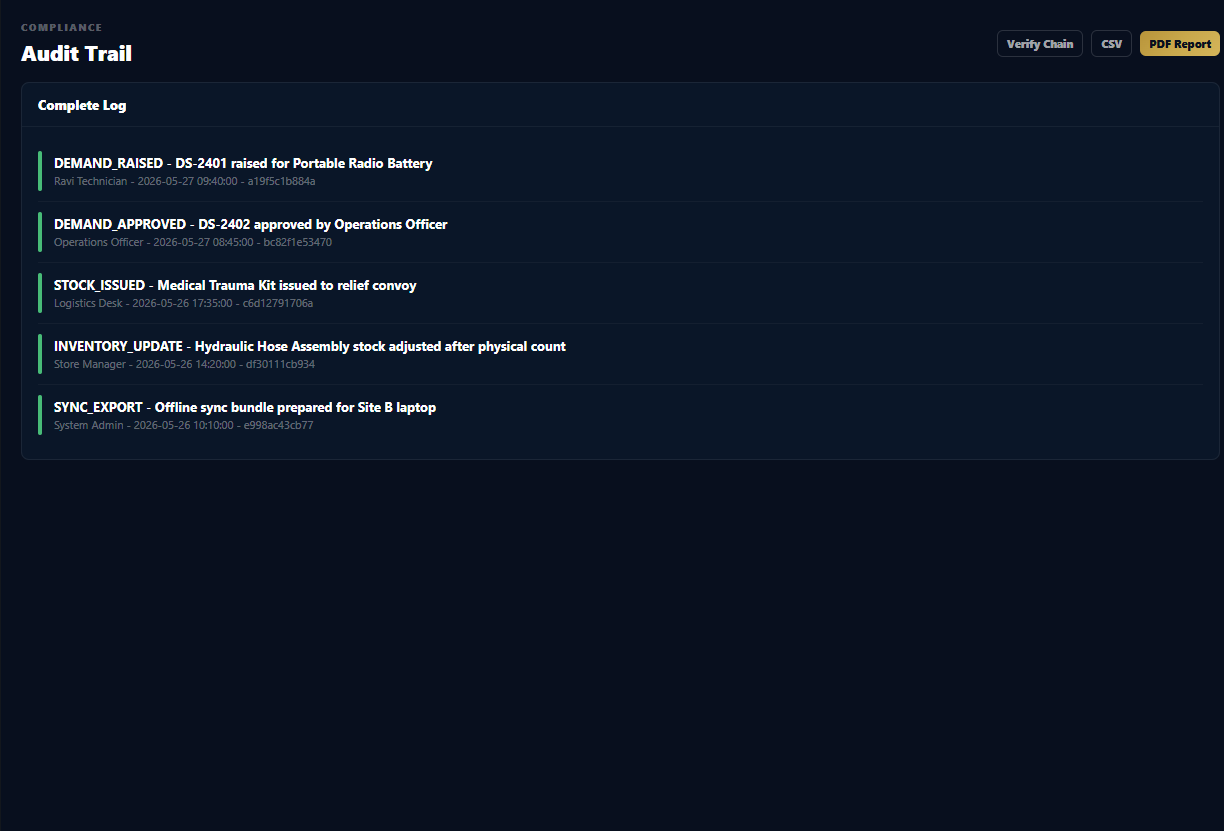
  4. The audit trail records who raised, approved, issued, or modified the demand.

Track assets with physical identity.

  1. Create asset records for vehicles, kits, crates, equipment, tools, or critical items.
  2. Assign custodian, location, serviceability status, and last known movement.
  3. Generate or attach QR tags where supported.
  4. Scan QR tags to verify item identity, update status, or open the asset record quickly.

Review accountability and readiness.

  • Use audit logs to review important actions by user, role, time, and record.
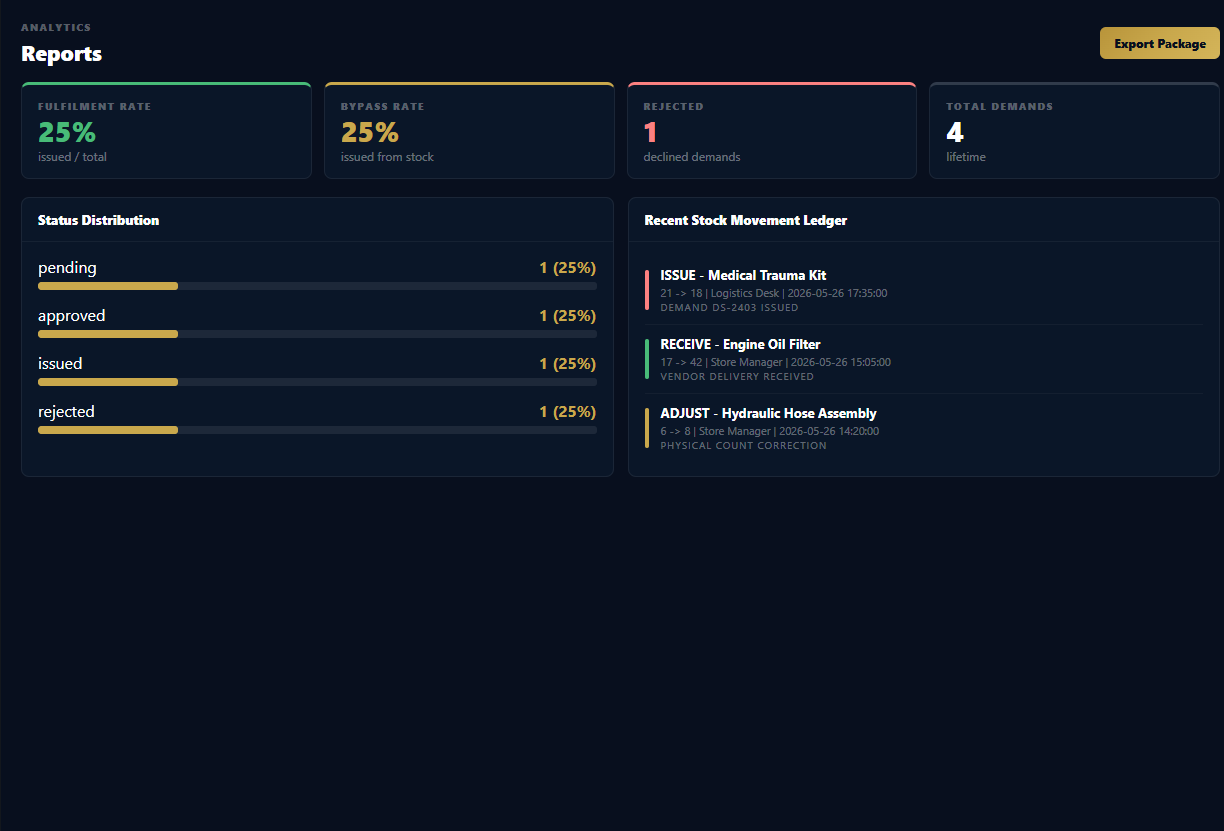
  • Use readiness views to understand stock, assets, backlog, and operational risk.
  • Export reports only when allowed by your role and organisation policy.
  • Keep operational comments clear so later reviews understand why decisions were made.

Use WYNTIQ when connectivity is limited.

  1. Continue recording approved local activity while offline if your deployment supports it.
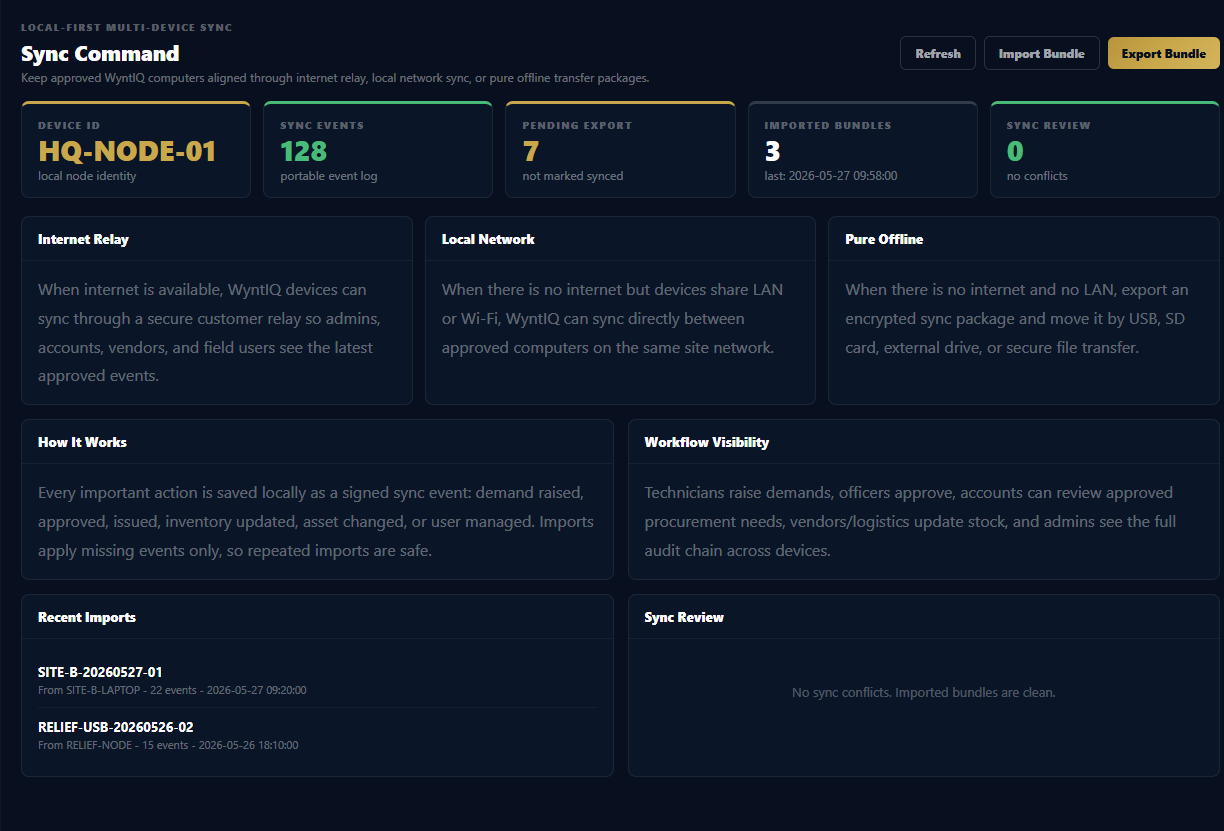
  2. Check sync diagnostics for pending events, node health, and last successful synchronization.
  3. Use approved fallback transfer methods only if configured for your organisation.
  4. When connectivity returns, review sync status before relying on central dashboards.
Offline-first does not mean careless data handling. Follow your organisation's policy for device security, backups, exports, and transfer media.

When to contact support.

  • Activation code is expired, rejected, or tied to the wrong device.
  • Trial has expired and you need an extension or paid conversion.
  • Users cannot access the correct role or workflow.
  • Sync diagnostics show repeated failures or pending events are not clearing.
  • You need deployment planning for production use.

Need guided onboarding?

Tell us your sector, users, and deployment environment. We can walk your team through the workflows that matter most.